
Ensemble Ad Fontes

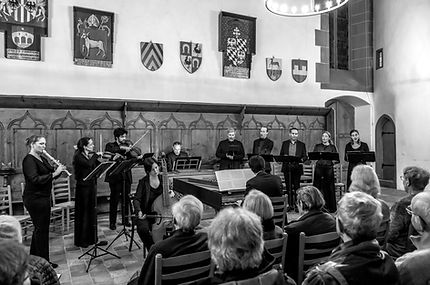
Foto: Kathrin Schultess - cms
Quelle merveilleuse aventure. Music at the Court of Louis XIII
Sunday, February 1, 2026, 7:00 PM – Kartäuserkirche Basel
Friday, February 27, 2026, 7:30 PM – Reformed Church of St. Arbogast, Winterthur
(in cooperation with the Musica Antiqua Winterthur)
Programme
Étienne Moulinié (1599–1676): Motets from Meslanges (selected) and Fantaisies à 4 viols
Pierre Guédron (1565–1620): Airs de Cour (selected)
Jean-Baptiste Lully (1632 - 1687): Trios
Antoine Boësset (1586–1643): Récit du Dieu des Songes “Quelle merveilleuse aventure” from the Ballet de la Reine
Ensemble Ad Fontes:
Anne Simone Aeberhard (recorders) – Filipa Meneses (viola da gamba) – Mojca Gal (violin) – Avishai Chalmeides (viola) – Thys Grobelnik (harpsichord) - Stefan Beltinger (chest organ)
Vocal Ensemble Lamaraviglia:
Jessica Jans and Stephanie Boller (soprano) – Matthias Deger and Ivo Haun (tenor) – Jedediah Allen (bass)
Airs de cour, motets, ballet and consort music from the early 17th century
Even before the splendor of Versailles under Louis XIV amazed the world, cultural life at the French court was already flourishing. The reign of Louis XIII marked a particularly refined artistic era—shaped by a king who was himself a musician, dancer, and composer. Trained in lute and violin, he embodied the ideal of the courtly gentleman: educated, cultivated, and deeply engaged with the arts.
Particularly characteristic of this time was the ballet de cour, the elegant union of music, dance, and poetry. It was still a form of aesthetic and artistic expression—before it evolved under his son into a tool of political power.
This evening’s programme transports the audience into the soundscape of the early Baroque: from sacred motets and worldly airs de cour to playful instrumental music, including works by Étienne Moulinié. With compositions by Pierre Guédron, Antoine Boësset, and Moulinié, the ensembles Ad Fontes and Lamaraviglia paint a vivid portrait of the French court at the threshold between Renaissance and Baroque.